Design Tips for Small Bathroom Shower Areas
Designing a small bathroom shower requires careful consideration of space efficiency, functionality, and aesthetic appeal. Compact layouts must maximize limited square footage while maintaining comfort and usability. Various configurations can optimize space, including corner showers, walk-in designs, and shower-tub combinations. Proper planning can create a visually appealing environment that feels open and inviting despite size constraints.
Corner showers utilize often underused space in small bathrooms. They typically feature a triangular or quadrant shape, fitting neatly into a corner to free up room for other fixtures. These layouts are ideal for maximizing space while providing a functional shower area.
Walk-in showers with frameless glass enclosures create an open and airy feel in small bathrooms. They eliminate the need for a door, reducing visual clutter, and can incorporate built-in niches for storage, enhancing convenience without sacrificing space.
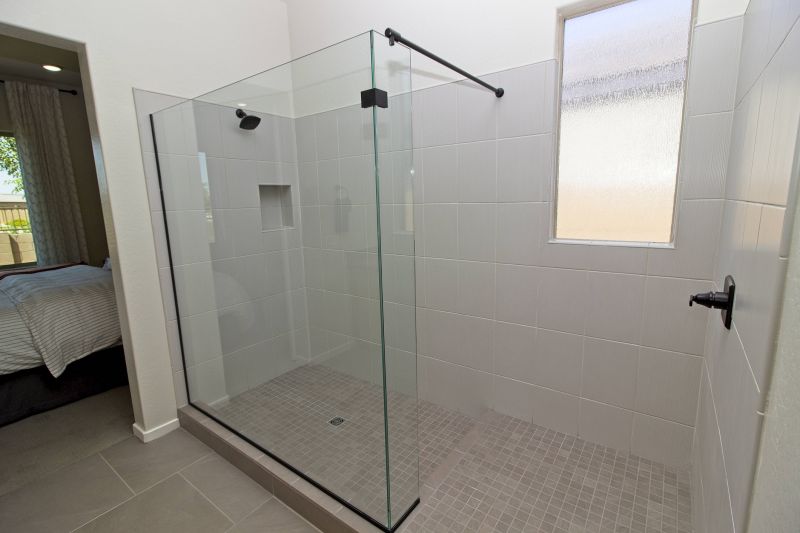
A compact corner shower with glass panels and minimal framing maximizes space while maintaining a modern look.
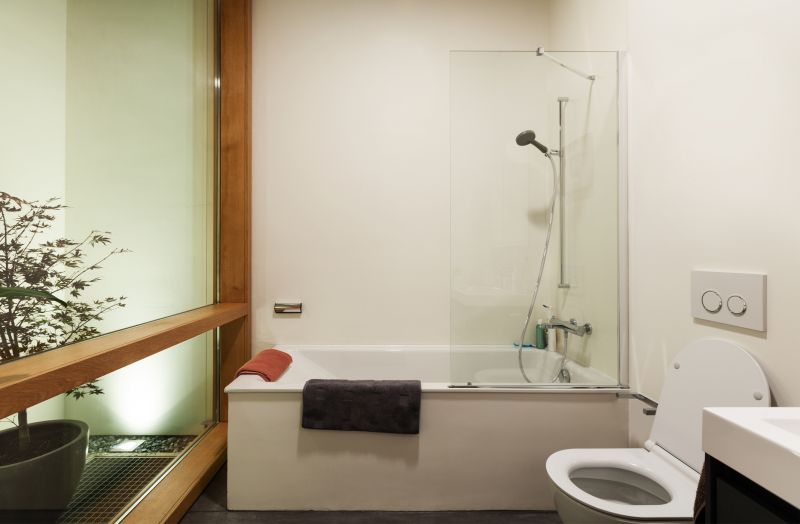
A small bathroom integrating a shower with a tub offers versatility, especially in limited spaces.
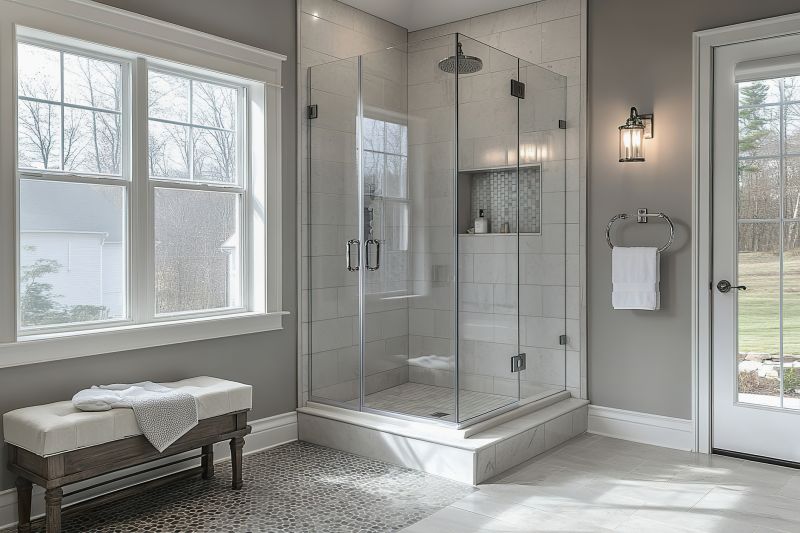
A sleek, frameless walk-in shower enhances the sense of openness in a small bathroom.
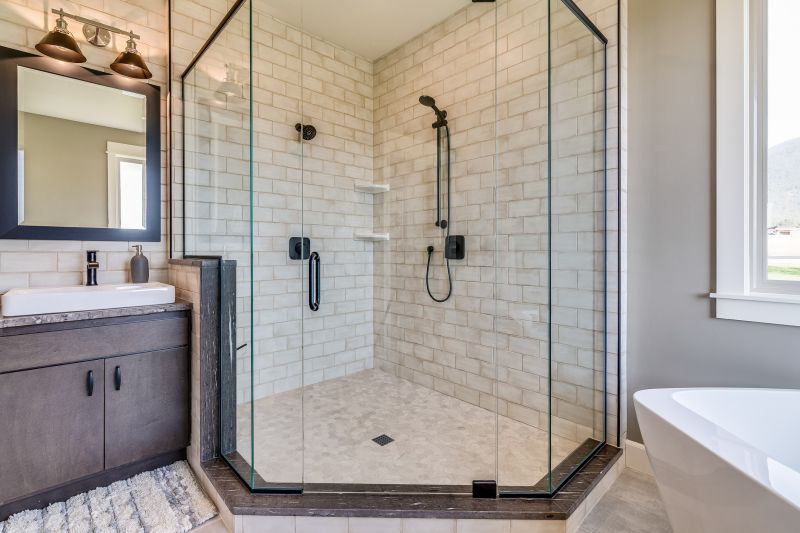
Built-in niches provide storage without protruding fixtures, ideal for small shower areas.
In small bathroom shower designs, glass enclosures are favored for their ability to create a sense of openness. Frameless glass options reduce visual barriers, making the space appear larger. Incorporating built-in shelving or niches within the shower area adds functionality without sacrificing space. Choosing sliding or bi-fold doors can also prevent door swing issues, further optimizing the layout.
Sliding doors are space-efficient, eliminating the need for clearance to open outward, making them suitable for tight spaces.
Bi-fold doors fold inward or outward, saving space and providing easy access to small shower areas.
Lighting plays a significant role in small bathroom shower layouts. Bright, well-placed lighting can make a confined space feel larger and more welcoming. Combining natural light with layered artificial lighting enhances visibility and highlights design features. Mirrors and reflective surfaces further amplify the sense of space, creating an illusion of openness.
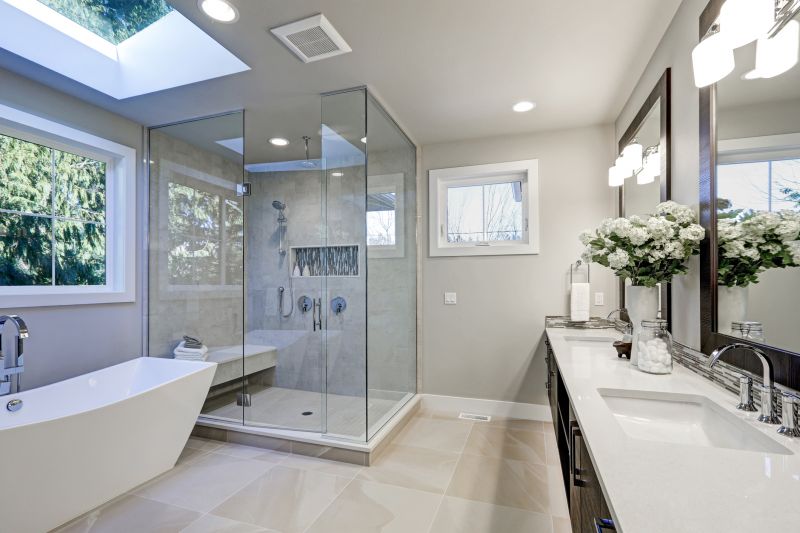
A small shower with ample lighting and reflective tiles creates a bright, spacious atmosphere.
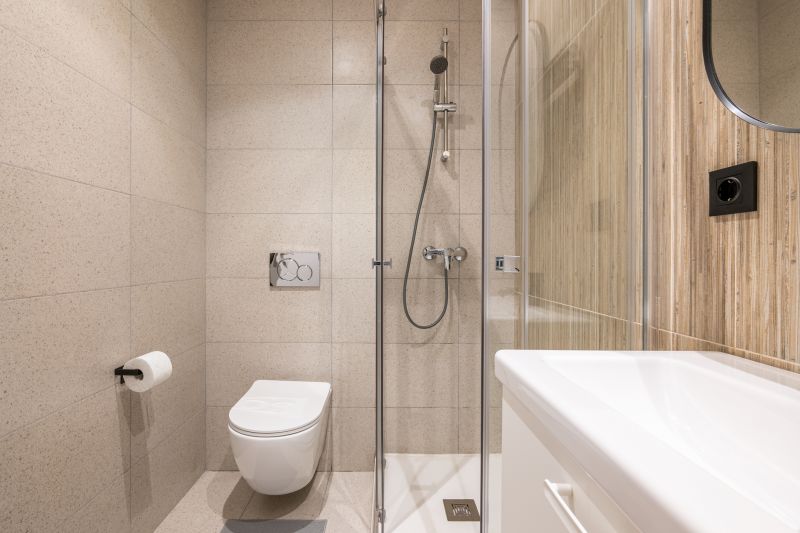
Glass walls and strategic lighting emphasize the openness of the shower area.
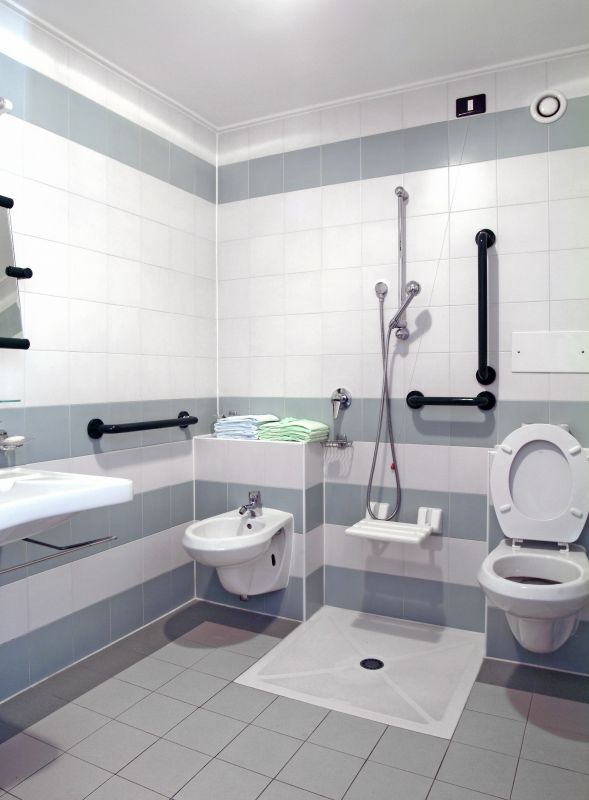
Efficient use of space with integrated storage and lighting enhances functionality.
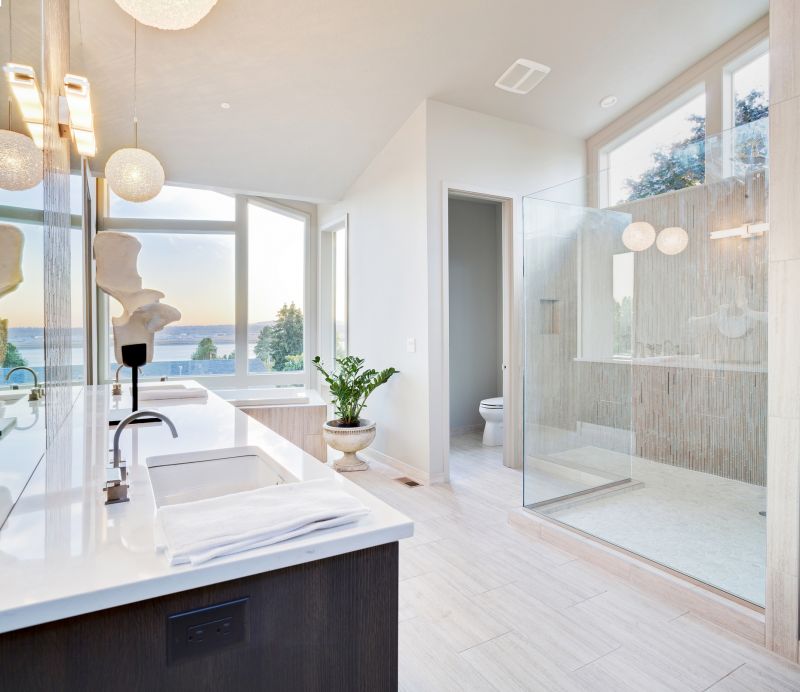
Maximizing natural light makes small bathrooms feel larger and more inviting.
Material choices significantly influence the perception of space in small bathroom showers. Light-colored tiles, large-format surfaces, and matte finishes reduce visual clutter and reflect light effectively. Textured tiles can add visual interest without overwhelming the space. Properly selected fixtures and hardware should be proportionate to the shower size to maintain a balanced look.
| Design Element | Considerations |
|---|---|
| Shape | Corner, rectangular, or curved layouts optimize different space configurations. |
| Enclosure | Frameless glass enhances openness; sliding doors save space. |
| Storage | Built-in niches or shelves prevent clutter and maximize usability. |
| Lighting | Layered lighting and mirrors improve brightness and perception of space. |
| Materials | Light-colored tiles and large formats create a sense of openness. |
| Fixtures | Compact fixtures and proportionate hardware maintain balance. |
| Accessibility | Walk-in designs with no thresholds facilitate movement. |
| Ventilation | Effective airflow prevents moisture buildup in small spaces. |